In this conversation, we sat down with Ylmar, Head of Marketing & Ecommerce at Le Nouveau Chef, together with Midge, Director of CRM at Domaine, to talk about brand building, community, customer experience and the technology behind it all.
Building belonging: how a chef jacket became a community signal
Midge (Domaine): You came from a fashion background before joining Le Nouveau Chef. What lessons from fashion do you apply to the world of gastronomy?
Ylmar (Le Nouveau Chef): Before joining Le Nouveau Chef, I ran my own premium footwear company for eight years. And before that, I worked as a brand manager in fashion. What I learned there is that brands are really built on emotion.
That's quite different from workwear, which traditionally focuses on functionality and durability. A chef jacket needs to be practical, it needs to withstand washing at 60 degrees, and it needs to perform. But when you bring a branding mindset into a relatively conservative category, you can make a much bigger impact. That's what we wanted to do with Le Nouveau Chef: move beyond functionality and create something that people can identify with.
Midge (Domaine): When would you say Le Nouveau Chef became more of a lifestyle brand? Was that driven by technology, or did something else happen?
Ylmar (Le Nouveau Chef): It actually happened before the technology. The turning point was when kitchens became open kitchens. Suddenly, guests could see chefs at work. Chefs became much more visible and, in a way, became rock stars. They weren't just people working behind the scenes anymore. What they wore became part of how they presented themselves.
That's when chefwear started to become more than just workwear, and became part of a chef's identity.
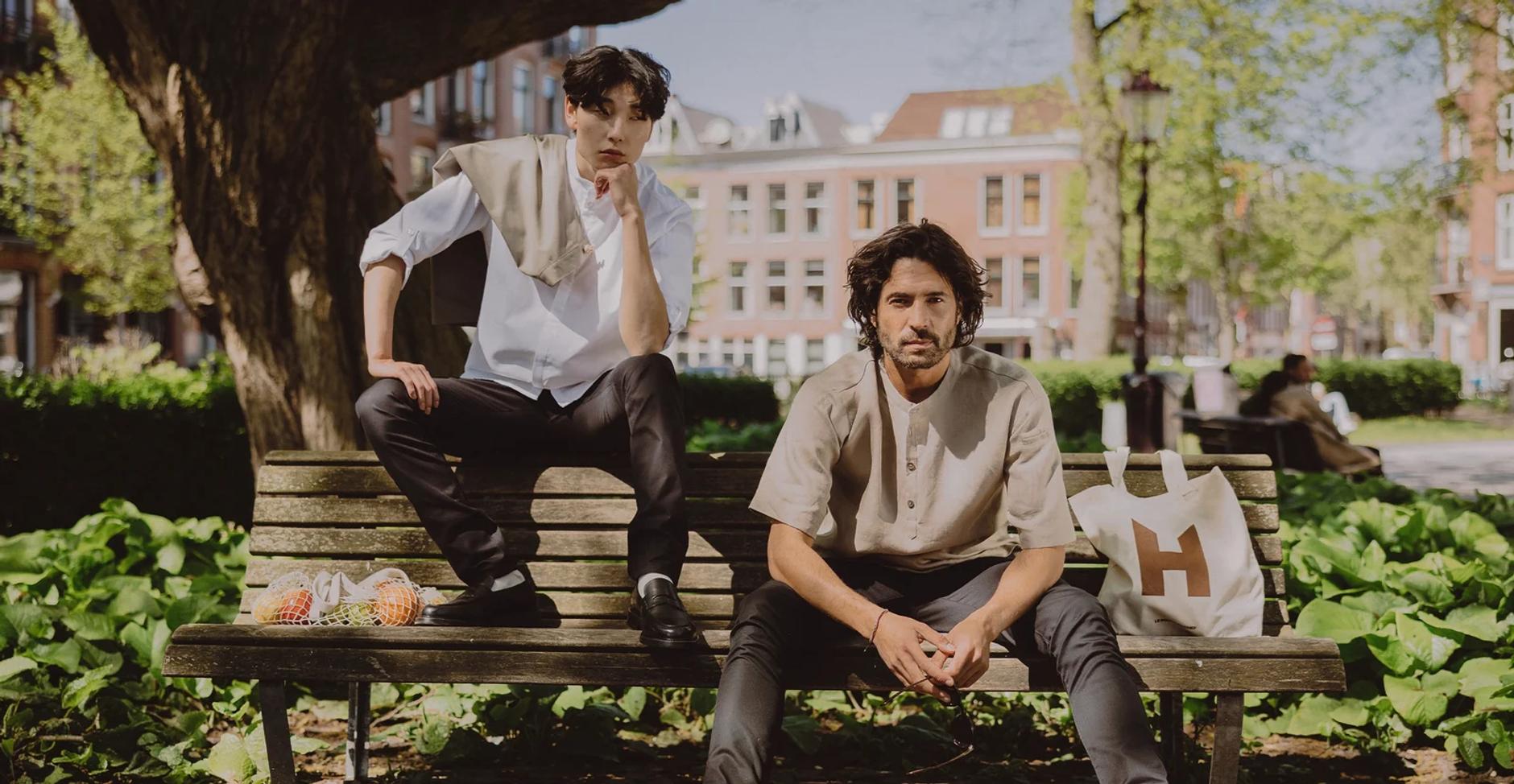
Today, we're celebrating our 40th anniversary and becoming more of a heritage brand. The small H on our sleeve has also become a quality mark. When chefs see someone else wearing it, there's an immediate connection. They know they're part of the same group of people who care about their craft.
The three-star Michelin approach to ecommerce service
Midge (Domaine): You're working towards a premium service experience, inspired in part by high-end restaurants. What do you see as the connection between a premium restaurant experience and premium ecommerce?
Ylmar (Le Nouveau Chef): In most cases, a premium restaurant experience isn't really about the food, you can get good food at home. It's about the experience and what you remember. You remember the waiter was nice, they remembered your birthday, and how you felt; the same applies to ecommerce. We want customers to remember the experience, not just the product they bought.
Internally, we often use the metaphor of 'three-star Michelin service'. That means creating memorable experiences through small details. It could be a handwritten note in a package, a birthday message or remembering something a customer told us previously. These things may seem small, but they're what make an experience memorable.
Midge (Domaine): You have a very diverse customer base, from individual chefs to restaurants and international hotel groups. What makes the brand stand out in such a functional category?
Ylmar (Le Nouveau Chef): You can buy a white chef jacket almost anywhere in the world. But a white chef jacket from Le Nouveau Chef means something different.
As I said before, the H on the sleeve tells you that you're part of a group of really good chefs. That's something people want to be part of. When chefs meet each other at events, they can instantly recognise each other because they're wearing the same clothing, and that creates a sense of community that goes beyond the product itself.

We're now also bringing more of that community into our digital channels, working on a community hub where chefs can find recipes, meet our ambassadors and discover educational and entertaining content. The goal isn't always to sell something. We also want to give people a reason to spend time with the brand.
Midge (Domaine): We've talked about premium service and loyalty. What role does customer service play in that experience?
Ylmar (Le Nouveau Chef): Customer service is huge for us. Customers probably remember an interaction with our customer service team sooner than they remember one of our marketing campaigns. That's something we take very seriously.
Gorgias helps us make that experience more personal. When a customer contacts us, the team can see whether they're a champion or loyal customer and adjust the way they communicate accordingly. We can also prioritise those tickets so our most valuable customers receive the level of service we want to provide. That's how we bring the idea of premium service into every part of the customer journey.

Midge (Domaine): Returns are a major challenge for many ecommerce brands. How do you approach them at Le Nouveau Chef?
Ylmar (Le Nouveau Chef): We don't really see returns as a logistics problem. For us, they're a customer experience problem. That's why we've invested in reducing them in the first place.
We introduced a fit quiz that helps customers choose the right size. We also created product videos so customers can see how the products actually fit, and we added detailed product reviews that cover things like comfort and whether an item runs large or small.
The important thing is that we don't stop there. When a customer returns something, they give us a reason. We feed that information back into the system and adjust our sizing advice based on what we're learning. When we started this process, our return rate was 16%. We're now down to 8%. That's a significant improvement, but more importantly, it means we're creating a better experience for customers before they even place the order.
Midge (Domaine): How does loyalty fit into that strategy, and what role does it play in building your community?
Ylmar (Le Nouveau Chef): For us, loyalty is mainly about retention. Acquisition costs have increased quite a lot over the past few years, so we're focusing more on keeping existing customers engaged. And we have a lot of opportunities to sell more to an existing customer.
If someone buys a chef jacket, they might later need an apron or chef trousers. After a couple of years, they may need to replace their jacket. Or a new member joins their restaurant team and needs a new set, we want to be there when that moment happens.
Why the right tech foundation makes growth easier
Midge (Domaine): You've described technology as a foundation for innovation. Why is the tech stack so important to Le Nouveau Chef?
Ylmar (Le Nouveau Chef): When I joined the company, we were working with a fairly heavy Shopware setup with a lot of custom work. The team wasn't very happy with it, so we moved to Shopify.
For us, the biggest benefit is flexibility. We can test things, scale up or down quickly and add new stores without creating unnecessary complexity. Today, we have seven Shopify stores. We have our main flagship store, two wholesale stores for dealers and schools, and five franchise stores.
Around Shopify, we use a Product Information Management system, Klaviyo for email marketing, Gorgias for customer service, Reviews.io for product reviews and a loyalty platform for our members. The goal isn't to have as many tools as possible. It's about creating an ecosystem where everything works together.
Midge (Domaine): With so many ecommerce applications available, how do you make sure the technology doesn't become too complex?
Ylmar (Le Nouveau Chef): We look at how much of an application we actually need. If we only use 10% of a heavy application, we sometimes decide not to use it at all. Instead, we look at whether we can build something ourselves that is lighter and better suited to what we need.
For us, it's about stripping things back to the basics and focusing on the important steps. The technology should support the strategy, not become the strategy.
Midge (Domaine): Looking at everything you've built, what's the biggest lesson you've learned about turning Le Nouveau Chef into a lifestyle brand?
Ylmar (Le Nouveau Chef): The biggest thing is that the technology wasn't the starting point, the cultural shift came first. When chefs became more visible, chefwear became part of their identity. We recognised that and started building a brand around that identity and community.
Technology now gives us the foundation to scale that experience internationally. It helps us understand customers, personalise communication, improve service and remove repetitive work. But the technology is there to support the brand.
For Le Nouveau Chef, becoming a lifestyle brand was never about adding more technology. It was about understanding what the product means to the people wearing it and then building the experience around that.
From customer data to customer relevance
Midge (Domaine): Personalization and segmentation are becoming increasingly important. How do you use customer data to make your communication more relevant?
Ylmar (Le Nouveau Chef): For us, it's about getting the right message to the right customer at the right time. We use RFM groups in Klaviyo to understand customer behaviour. We look at recency, frequency and monetary value to see who our most engaged customers are, who is highly valuable and who might be at risk of leaving.
We have five different groups, and our goal is to move customers into a higher group over time. That means the messaging is different for every group. A customer who's at risk might receive a more urgent message or an incentive to come back. A loyal customer or champion might receive a reward, such as one of our more premium chef jackets.
It's much more relevant than sending the same email to everyone.
Using AI to turn 45 minutes of work into 30 seconds
Midge (Domaine): AI is everywhere at the moment. How are you using it at Le Nouveau Chef?
Ylmar (Le Nouveau Chef): We're mainly using AI operationally. We're not trying to make everything about AI. We're looking for repetitive processes that have a relatively simple workflow but can have a big impact on the business.
For example, one of our large marketplace customers changed their replenishment system. Instead of an API connection, we started receiving PDF orders by email. Normally, we would have needed to build a specific API for that. Instead, we built a workflow that reads the PDF, processes the information and creates a draft order in Shopify. Our customer service team then only needs to check whether everything is correct.
A process that used to take around 45 minutes now takes about 30 seconds.
We're also seeing our partners use AI to build things like logo configurators and tools that scrape look books and connect the information to their PIM systems. The interesting thing is that these solutions don't always require a huge development project anymore. Small teams can build useful tools themselves in a matter of hours.
The brand comes first, technology follows.
Le Nouveau Chef's story offers a useful reminder for any brand looking to grow: technology alone doesn't create a better customer experience. The starting point is understanding what your product means to your customers and what you want them to feel when they interact with your brand. From there, technology can help turn that vision into something consistent, personal and scalable.
For Le Nouveau Chef, that meant looking beyond the chef jacket to the identity and community surrounding it. The result is a brand where ecommerce, customer service, loyalty and AI all work towards the same goal: making the customer experience better. And that's perhaps the bigger opportunity for brands today. Instead of asking what technology they should add next, they can start by asking a simpler question: what experience do we want our customers to remember? Once that is clear, the technology has a much more meaningful role to play.
To learn more about Le Nouveau Chef and explore their products, visit www.lenouveauchef.com