Nowhere is that challenge more apparent than with sectional furniture, where size, configuration, fabric, and depth all play a role in whether a piece truly fits a customer’s space and style. Without the ability to explore those choices clearly and visually, the online experience can quickly feel abstract, pushing customers back toward showrooms or away from the purchase altogether.
Arhaus saw an opportunity to close that gap. This couldn’t be solved with just a configurator, the experience needed to feel elevated, immersive, intuitive, and visually refined, matching the care and craftsmanship of the product itself. Already working with Domaine and leveraging rendering partner 3D Source, Arhaus’ goal was to create the best sectional customizer available online, one that raised the bar through thoughtful interaction design and high-quality graphics, setting it well above existing market alternatives.
Unpacking Customization
Most furniture configurators tend to prioritize functionality over experience. Customers are asked to select options from lists, imagine how individual components fit together, and mentally translate dimensions into real space. The process quickly becomes abstract and transactional — not the type of experience customers expect when purchasing such a large ticket product.
For sectionals, this challenge is amplified. Configuration matters, fit matters, orientation matters, depth matters, and fabric choice can fundamentally change how a piece looks and feels. At this price point, guesswork isn’t a realistic option, which is why many customers still default to in-store shopping. While that works when a showroom is nearby, for predominantly online retailers the ability to confidently purchase a customized piece digitally can be the deciding factor between one brand and another.
This challenge isn’t unique to furniture. Customization appears across many high-consideration categories, from sectionals and eyewear to jewellery and apparel, where fit, personal preference, and long-term value play a central role. In these contexts, simply offering customization isn’t enough. If the experience is difficult to use, or if what a customer believes they’re creating doesn’t align with the final result, the value quickly disappears.
Rather than acting as a novelty or visual gimmick, Arhaus’ customizer needed to support real decision-making while reinforcing the brand’s positioning as premium, considered, and design-led.
Assembling the Experience
Together with Domaine, Arhaus set out to create a 3D sectional customizer that made configuration feel natural rather than overwhelming. The goal wasn’t simply to let customers assemble pieces, but to support confident decision-making in a category where visual clarity and reassurance matter just as much as flexibility.
Sectionals aren’t modular in the way many people expect. Certain pieces can only connect in specific positions, orientation plays a critical role, and not every configuration can be manufactured or purchased. Rather than surfacing that complexity directly, the experience Domaine created for Arhaus guides users visually. Customers build their sectional by selecting components and placing them via clearly marked “+” indicators that show exactly where new sections can be added. This removes guesswork and prevents frustration, allowing users to focus on shaping the sofa rather than figuring out the rules behind it.
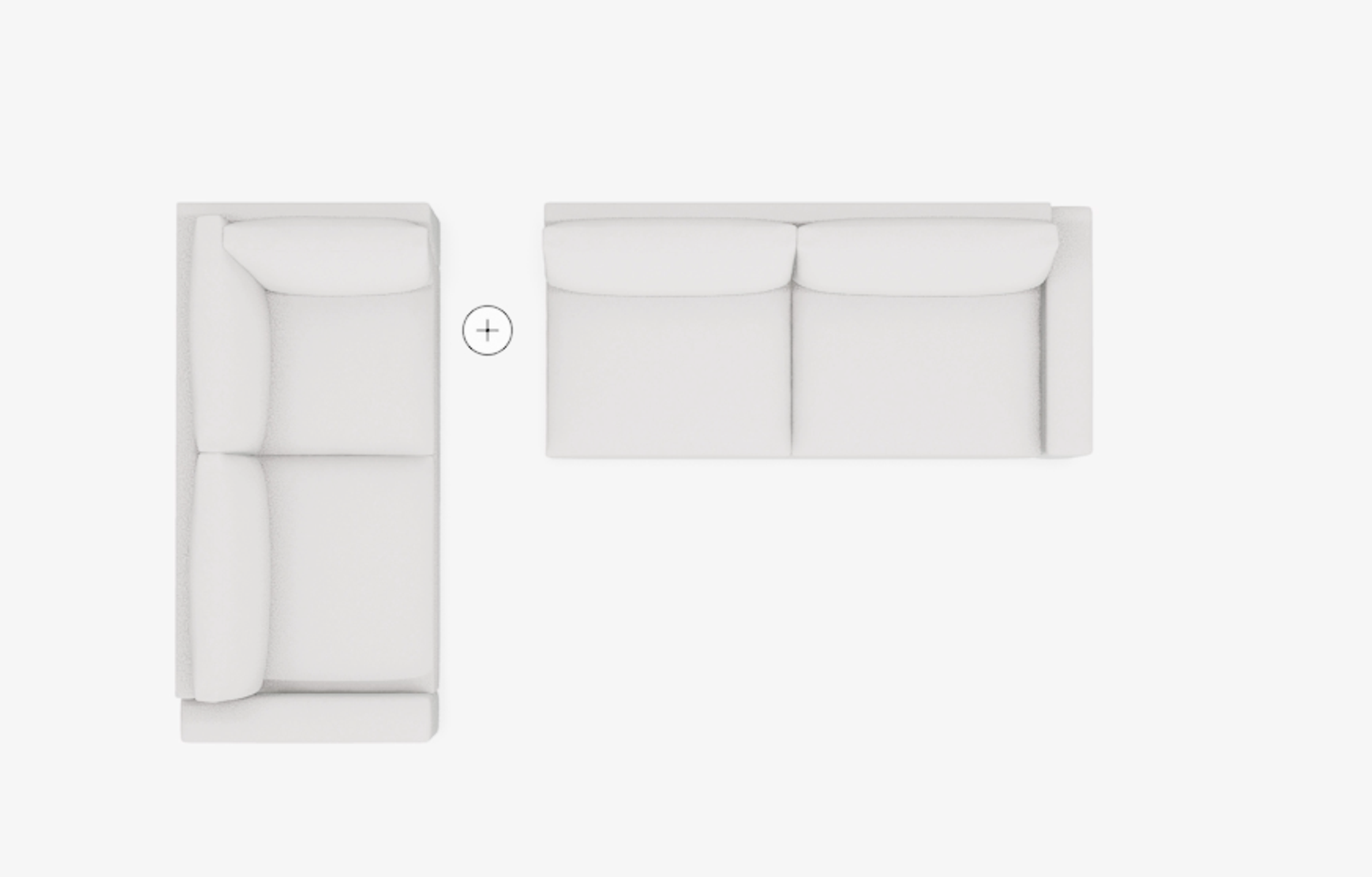
As pieces are added or removed — extending the layout, forming an L-shape, or introducing a chaise — the sectional updates in real time, both visually and in price. This immediate feedback reinforces a sense of control and helps customers understand the impact of each decision as they make it.
Fabric selection follows the same principle of clarity without overload. Rather than relying on traditional PDP-style colour swatches, the customizer uses large fabric tiles that allow customers to explore materials in more depth. Each swatch opens into additional information about composition and origin, while the 3D model updates instantly to reflect the selection.
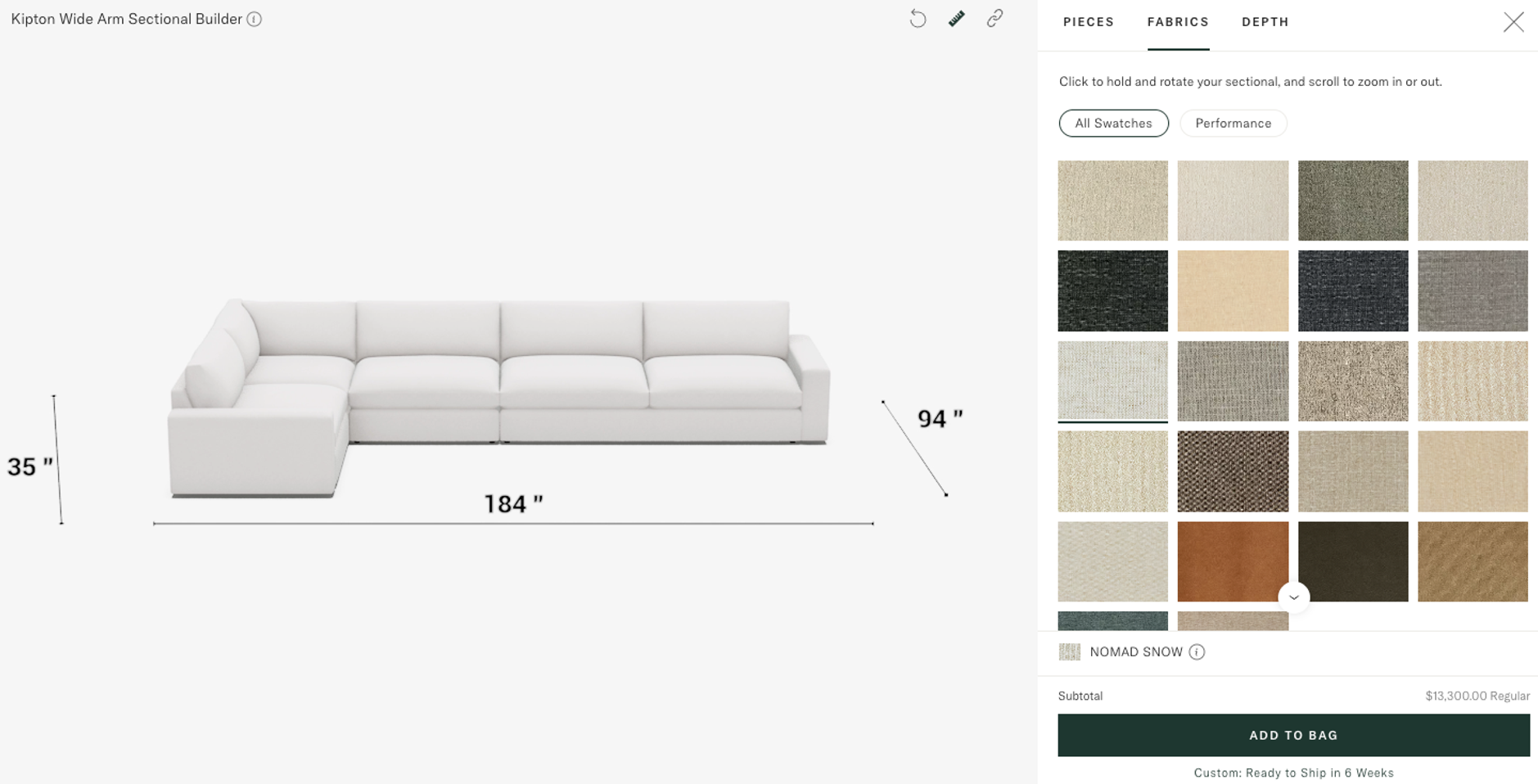
This approach was deliberate. In user testing, fabric type and features emerged as the most important consideration for customers when evaluating a sectional, well ahead of price and room fit. Giving fabric its own space within the experience ensured this information felt accessible without introducing excessive scrolling or distraction.
Once a configuration is complete, a pop up prompts the users to confirm their choice and price before proceeding to add the sectional to their bag.
From Flat to 3D
One of the defining features of the customizer is its visual realism. Developed in partnership with 3D Source, the sectional is rendered in high fidelity, allowing customers to rotate the sofa, view it from all angles, and better understand depth, scale, and proportion as they build.
From the customer’s perspective, the experience feels like a natural extension of the Arhaus website. Shoppers can enter the customizer directly from the Living category or from a sectional PDP, moving to the visualizer without the sense that they’ve left the site or moved into a separate tool.
Within the visualizer, customers can explore their sectional in detail by rotating the sofa, toggling between standard and deep seating options, viewing dimension overlays directly on the model, and seeing fabric changes reflected instantly as selections are made.

Behind the scenes, the experience remains closely connected to Shopify in a way that supports both the customer and the business. As configurations are built, selections are dynamically mapped back to Arhaus’ product data, ensuring that pricing, SKUs, and availability reflect exactly what’s been created. This connection allows inventory status, manufacturing lead times, and potential delays (such as fabric availability) to be accounted for and surfaced appropriately. The result is a customization experience that feels immersive and flexible on the front end, while remaining grounded in real-world product and fulfilment realities for the brand and its manufacturing partners.
Made to Measure Experiences
The Arhaus 3D customizer demonstrates that customization experiences don’t have to trade elegance for functionality. When thoughtfully designed, they can help customers understand complex products, feel confident in their choices, and connect more deeply with what they’re building.
By combining realistic 3D visualization, thoughtful UX constraints, and integration with Shopify product data, Arhaus has launched a customizer that stands apart from typical market offerings.
Whether you’re a furniture brand offering configurable seating, a home brand selling made-to-order pieces, or a retailer looking to better visualize high-consideration customized purchases, immersive customization can become a meaningful differentiator.
If this is a challenge your team is navigating, our experts would love to explore what’s possible—just as we did with Arhaus.