
In this conversation, we sat down with Jack Elrad, Senior Director of Ecommerce at David, and a Domaine client, to talk about what it takes to build a premium customer experience behind a high-performance product. After recently partnering with the David team to launch their new Shopify store, we dug into how post-purchase optimization, the now-infamous Cod Campaign, and a deep commitment to trust and transparency are shaping David’s approach to ecommerce — and where the team sees the biggest opportunities ahead.
About The Brand
Freyja: Tell us about David Protein, what’s your ‘elevator pitch’?
Jack: When our founders set out to create a high protein bar, they asked themselves the basic question: What should a protein bar be? It should be the most protein with the least amount of everything else. We deliver on that promise, better than anyone else, which is the most protein with the fewest calories in a way that is portable and delicious enough that you actually want to consume it.
Freyja: What’s your background and your role at David Protein
Jack: I've been at David Protein a little over a year now. I joined as the Director of Customer Experience a few weeks after we first launched.
I started my career in consulting, specifically in product and experience innovation. And so, I was exposed to a ton of different industries and types of problems. Everything from big box retail to agriculture technology, insurance, financial services, and more, working for some of the biggest companies in the world as well as small startups and challenger brands.
For me, I've always known I want to be an operator and so consulting was a really great foundation to build from. From there, I took what I knew about product and experience innovation and put it into David Protein. Everything at David Protein is consumer focused; we are constantly listening to our customers and diving into consumer data to inform our decisions. When you take that consumer-backed approach, you start to realize customer focus can drive long term value and a very durable strategy for a brand.
Freyja: Since joining David Protein, what’s been a favorite change or initiative you’ve led?
Jack: One change that has made a huge impact is post purchase order editing.
We were looking at ticket data to better understand why customers were reaching out. And, we found that the vast majority of customers were doing so usually within the first few minutes after purchase. Things like “Hey I need to change my address” “Can I add this to my order” “I clicked the wrong flavor”.
So, we added a self service order editing option. Once a customer places an order, we hold it for an hour so customers can add products, swap products and update their address. There’s two places a customer can do this: On the order confirmation page and in the post-purchase confirmation email. By doing this we’ve been able to significantly reduce cost of re-shipment and number of tickets/volume of customer outreach while providing a much more premium customer experience.
When we think about the experience we want our customers to have, we like to take inspiration from fine dining, where the food is really luxurious and high quality. But if the restaurant is too cold, you have a bad waiter, or the table next to you is loud, you’ll have a negative perception of the restaurant and likely never want to go back, even if the food was amazing. At David we have obsessed over every detail that goes into our bars and we want to make sure the customer experience matches that.
Freyja: What motivates you most about working in the ecommerce space?
Jack: I love the speed and flexibility of ecommerce. You’re able to rapidly test, learn, optimize and improve so quickly. Retail is an incredibly important channel to reach more customers, though once you’re on shelf, a lot is locked in. You’re operating around fixed reset dates and category planograms, which limits how quickly you can make changes. But we do CRO on our website and at any given moment, we might be having five to eight tests running with extremely conclusive data.
We're able to improve our website, create a better experience for our customers so quickly. With the speed of ecommerce there's always more ways to optimize, always better experiences that you can create. That's just exciting to me.
I also love how close you can get to the customer. And as a company that really likes hearing from our customers and talking with them, I love that ecommerce makes it easy to communicate directly, get their feedback, and share what we’re working on. I think that it builds a ton of brand advocacy and brand loyalty.
Spotlight: The ‘Cod’ Campaign
Last summer, David Protein released wild-caught frozen Atlantic cod as a product on their website, which made quite the splash with new customers and across the industry. We dive into the why behind the campaign, the success, and challenges learned.
Freyja: What inspired David Protein to focus on the ‘Cod Campaign’?
Jack: When we launched David Protein our team was doing the classic comparison chart: us vs. our competitors. Because we set out to create the most optimized protein bar, we were always coming out on top. So, we considered — outside of the protein bar world, what has a better protein to calorie ratio than our bars? And one of our scientific advisors, told us boiled cod has 92% of its calories coming from protein.
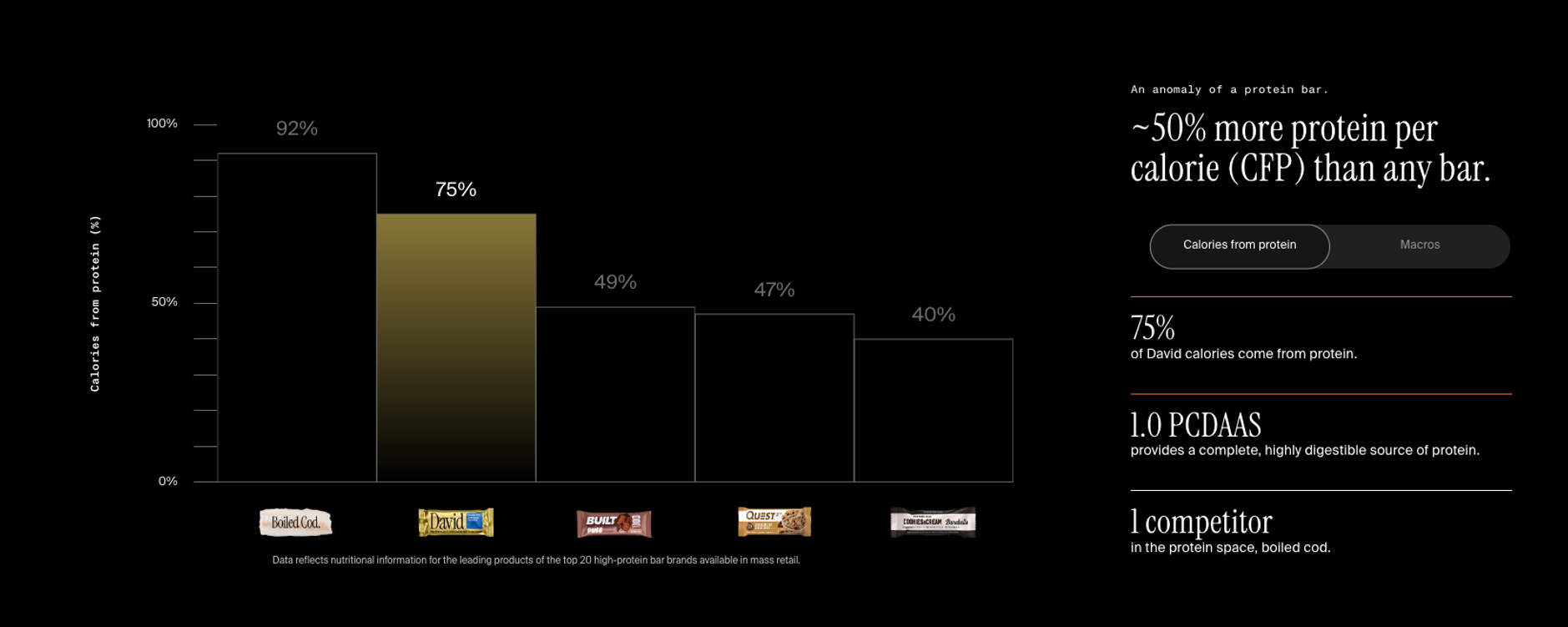
So we created a comparison chart with our competitors and boiled cod. In terms of protein to calorie ratio we weren’t far off boiled cod, but definitely preferable from a taste and convenience standpoint for many. Then we got the idea to use this as an opportunity to highlight the value of our bars. We had a whole campaign including billboards across New York with a really big picture of a frozen piece of fish —“slightly more protein per calorie than our bars”.
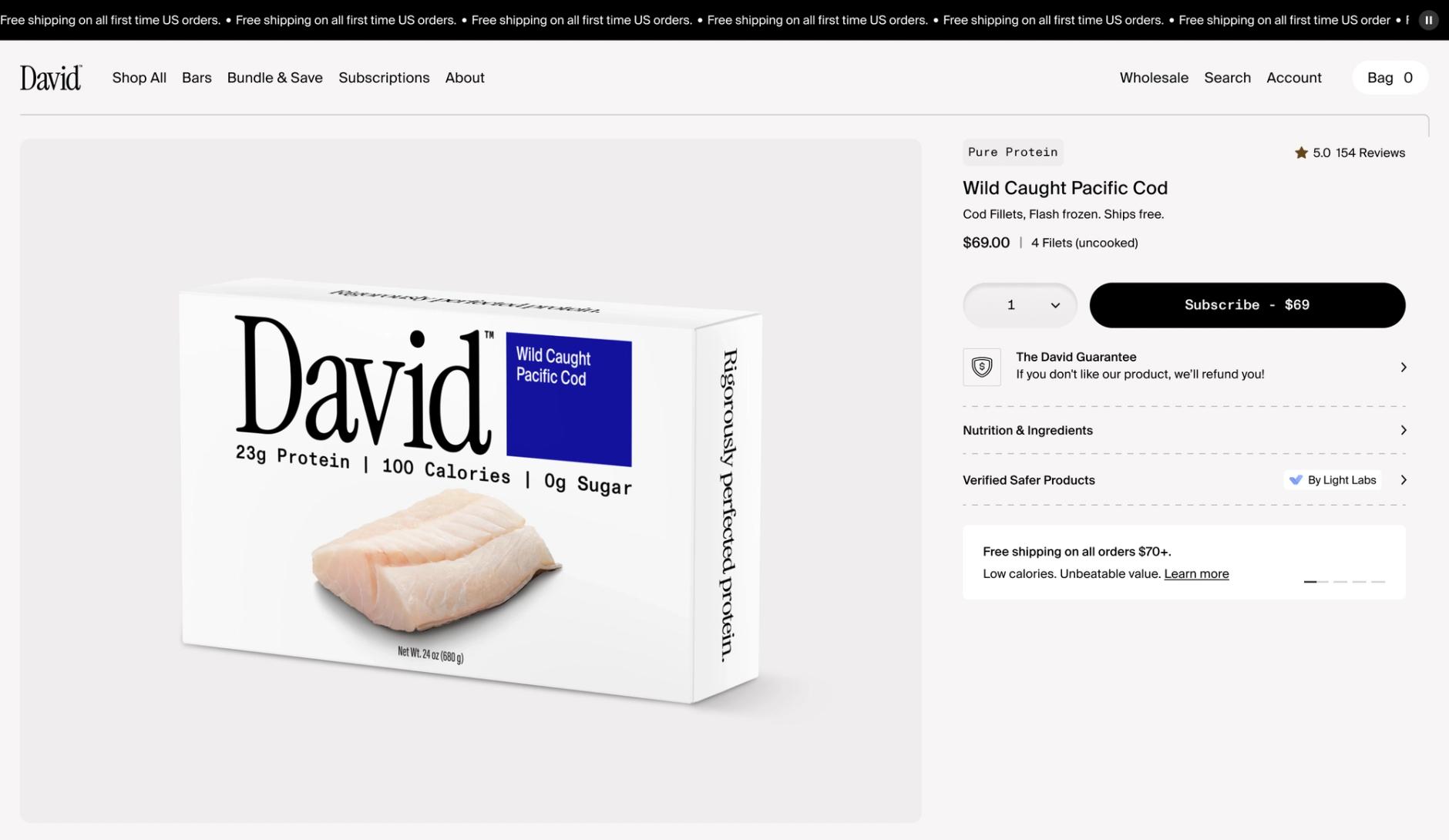
That was the whole campaign, “hey, if you want the most protein per calorie, boiled cod exists. If you're fine having slightly less, then we have this incredible product for you.” But to really commit to the bit, we decided to actually source and sell high quality cod from a fisherman in Alaska on our ecommerce site, flash frozen, and shipped directly to our customers.
Freyja: What were some of the biggest challenges you uncovered along the way?
Jack: Definitely the supply chain. We’re a protein bar company and we were selling frozen filets of fish in the middle of summer.
The logistics of packaging and getting appropriate carrier services to make sure that it gets to people's doors still frozen. And then on the backend, making sure our website could handle what was a completely different unit of the business. Questions arose like, “how do we provide the proper shipping options and pricing to customers on the back end?” “How are we splitting orders so that we aren't sending fish and protein bars in the same box?” “What happens when someone places an order on a Friday?” We weren’t going to let fish stall in transit.
Freyja: What impact did the ‘Cod’ campaign have on your customers? Did people order cod?
Jack: Yeah, people did order cod. The greatest metric was the exposure and mentions across socials that we had about it. It was shocking for people, but it really achieved its purpose which was deepening what our brand stands for: high quality sources of protein.
I think it was a really easily digestible way for people to understand just how superior our product is than others.
Reflections on the Ecommerce Industry
Freyja: What do today’s customers really want from brands?
Jack: Consumer trust. I think that that’s incredibly important in ecommerce because you’re so close to your customer but also so far. For us, transparency about our ingredients and product quality is really important to us.

There's a widget on our PDP where you can open up a modal and go flavor by flavor and see not only what our exact testing levels were, but we also how much of everything is in the bars. From the onset, our testing transparency program was always built under the assumption that it’s a foundational requirement to be transparent and build trust with our consumers — the quality of our product isn't a marketing moment, its something that we should be offering as an everyday core tenant of our business.
The level of trust and transparency from a company is gonna be table stakes in the industry soon — people will opt for brands that they trust.
Freyja: As something that’s been associated with mostly untrustworthy actions, how do you see AI fitting into trust-building for brands?
Jack: AI has a lot of potential to enhance internal workflows, make work quicker, more efficient and easier to do, but picking the right applications for AI use is really important. For example, we have an AI agent that we deployed on our help desk. We aim to give customers a value prop for our AI agents e.g. ‘we are using this so that you can get answers quicker’. But, we always give customers an off-ramp to a human if they need and we have really tight controls as to when AI engages vs. a human.
We use AI, but only when we are confident it can provide our customers with the same or better quality of service, faster.
Tools, Partners & Lessons
Freyja: You mentioned about picking the right apps for AI. What do brands really want from their tools, platforms and partners today?
Jack: You can have the best features, but if it doesn't seamlessly work with the rest of your systems, then you’ll never be able to realize the value of those. For example, a subscription platform needs to work seamlessly with OMS and order routing logic. On the frontend, how does it handle bundles and changing subscriptions and edited orders?
And at Domaine you guys know better than anyone, that a website is just the front for an extremely complex network of systems and tools on the backend. If those aren't all working together, it's impossible to have a seamless frontend experience for the customer.
Quickfire Questions
Freyja: Favorite ecommerce brand right now?
Jack: Graza is awesome. I've always liked Graza. I think they do really great branding marketing. Their website's really strong and their product portfolio and expansion has been really great as well.
Freyja: Favorite ecommerce trend?
Jack: The globalization of DTC, the ability to get international products without the logistics of purchasing from international companies. I think it's cool to be able to so easily experience other cultures like that.
Freyja: Favorite recent campaign?
Jack: It’s the Cod Campaign! But we have some very exciting ones coming up at the beginning of 2026 too.
Freyja: Dream collaboration?
Jack: I've always thought the Olympics would be really cool. I think our marketing and creative teams would have a lot of fun with the parallel between the olympic medals and our Gold and Bronze product lines. I also like that the Olympics is about the peak of human performance and commitment to excellence - and that's a core brand value for us.
Freyja: Favorite David protein product?
Jack: Blueberry Pie! It hasn't gotten the spotlight it deserves but people are starting to recognize how great it is. People are generally nervous to buy a fruit flavoured bar but I think we nailed blueberry pie.
What’s Next for David Protein?
Freyja: You alluded to some exciting campaigns coming up in 2026. What does great ecommerce look like for David protein in 2026?
Jack: For us, It’s the ability to provide additional value to our current customers. Whether that be new products, new experiences, or better experiences while also reaching new customers. We know there are tons of people who could benefit from our products that aren't current customers: Bio-hackers, the busy parent or professional that needs something healthy and quick, people recovering from surgeries, GLP1 users who need to maintain lean muscle mass as they’re losing weight, all the way to elderly individuals who’s ability to process and use protein decreases with age. And so, 2026 looks like reaching more and more of those customers and demonstrating how David can be applied to their needs and uses.
David Protein’s approach is a reminder that great ecommerce isn’t just about faster checkouts or flashier campaigns — it’s about aligning product truth, customer experience, and operational excellence at every touchpoint. Whether it’s giving customers more control after checkout, committing fully to a creative idea, or using transparency as a long-term trust lever, the team’s decisions are rooted in delivering real value.
As David looks toward 2026, they’re clear on deepening relationships with existing customers while expanding access to high-quality protein for entirely new audiences.
To learn more about David Protein and explore their products, visit davidprotein.com.


